Keep the design you agreed, all the way to handover.
Intent Charter is programme management built on design intent. The studio writes the intent down once. Every change, order, drawing and decision on the project is then checked against it, by everyone working on it, in one place.
For interior design studios, and for the owners, developers and programme leads who hire them.
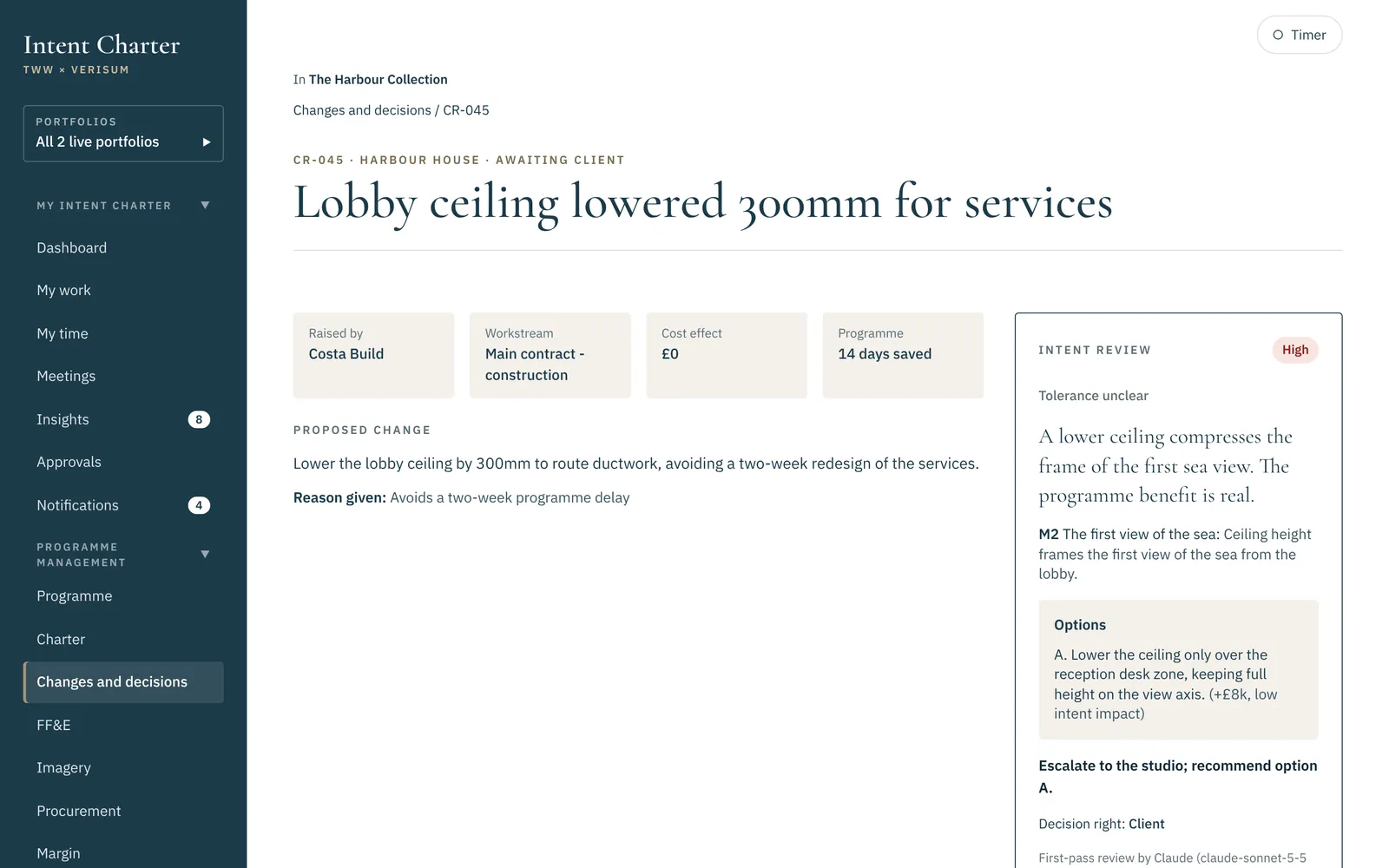
- Cost effect
- £0
- Programme
- 14 days saved
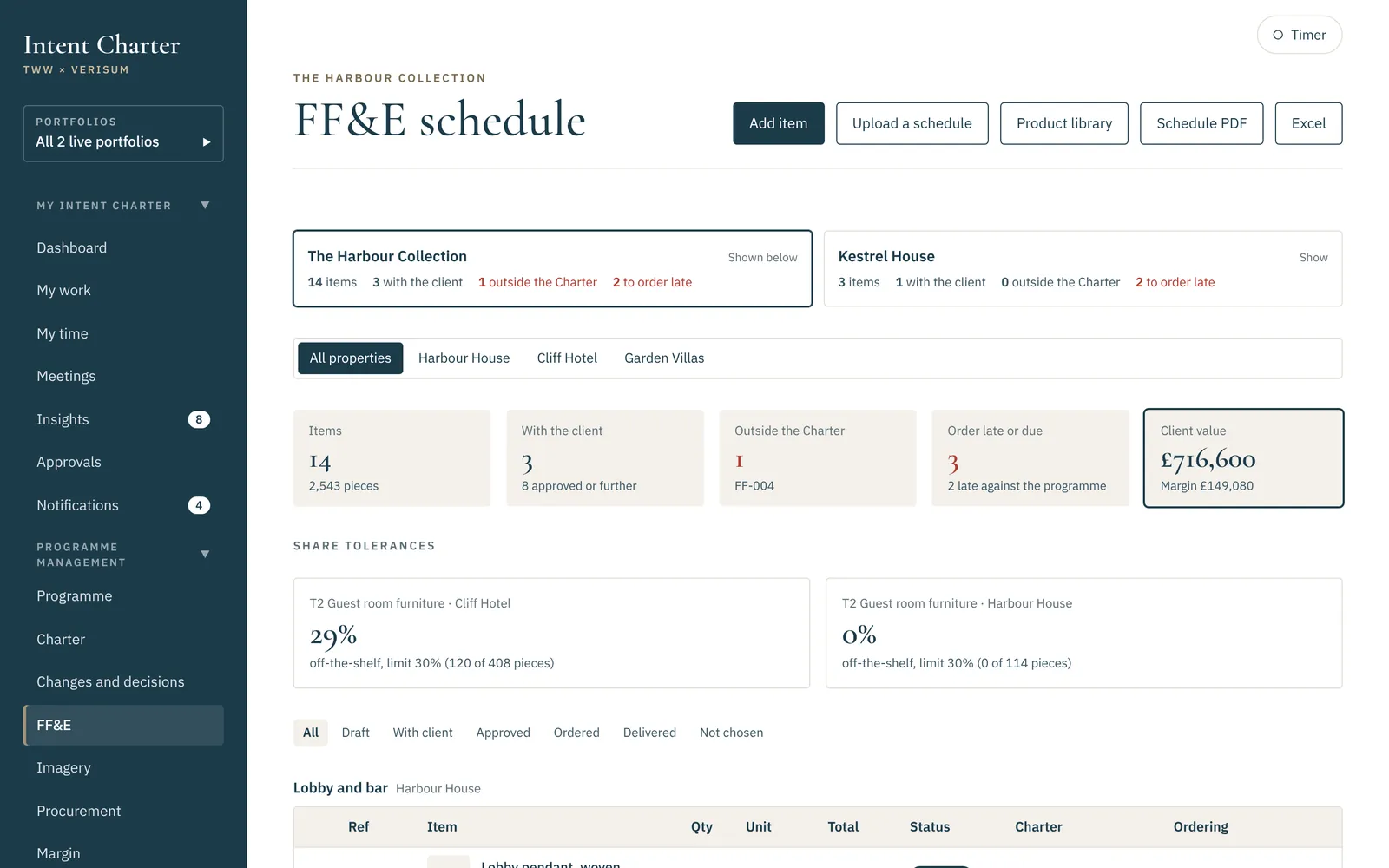
- Status
- With the client
A lower ceiling compresses the frame of the first sea view. The programme benefit is real.
Touches M2 The first view of the sea: ceiling height frames the view from the lobby.
Option A. Lower the ceiling only over the reception desk, keeping full height on the view axis. +£8k, low intent impact.
On every project someone owns time, cost and the build. Nobody owns the design intent.
It is lost one decision at a time
A cheaper lamp, a lower ceiling, a substitute tile. Each saving looks small on its own, and nobody adds them up against what the design was meant to do.
It lives in too many places
The specification in one tool, RFIs in another, decisions in email and meeting notes. No single place says what was agreed and what has changed since.
Owners see cost and dates, not the result
Reports cover the budget and the programme. They rarely tell the client whether they are still getting the place they paid for.
Design intent, written down so it can be checked
A Charter turns the studio's narrative into parts that a contractor, a supplier and a client can all work to. Everything else in the product hangs off it.
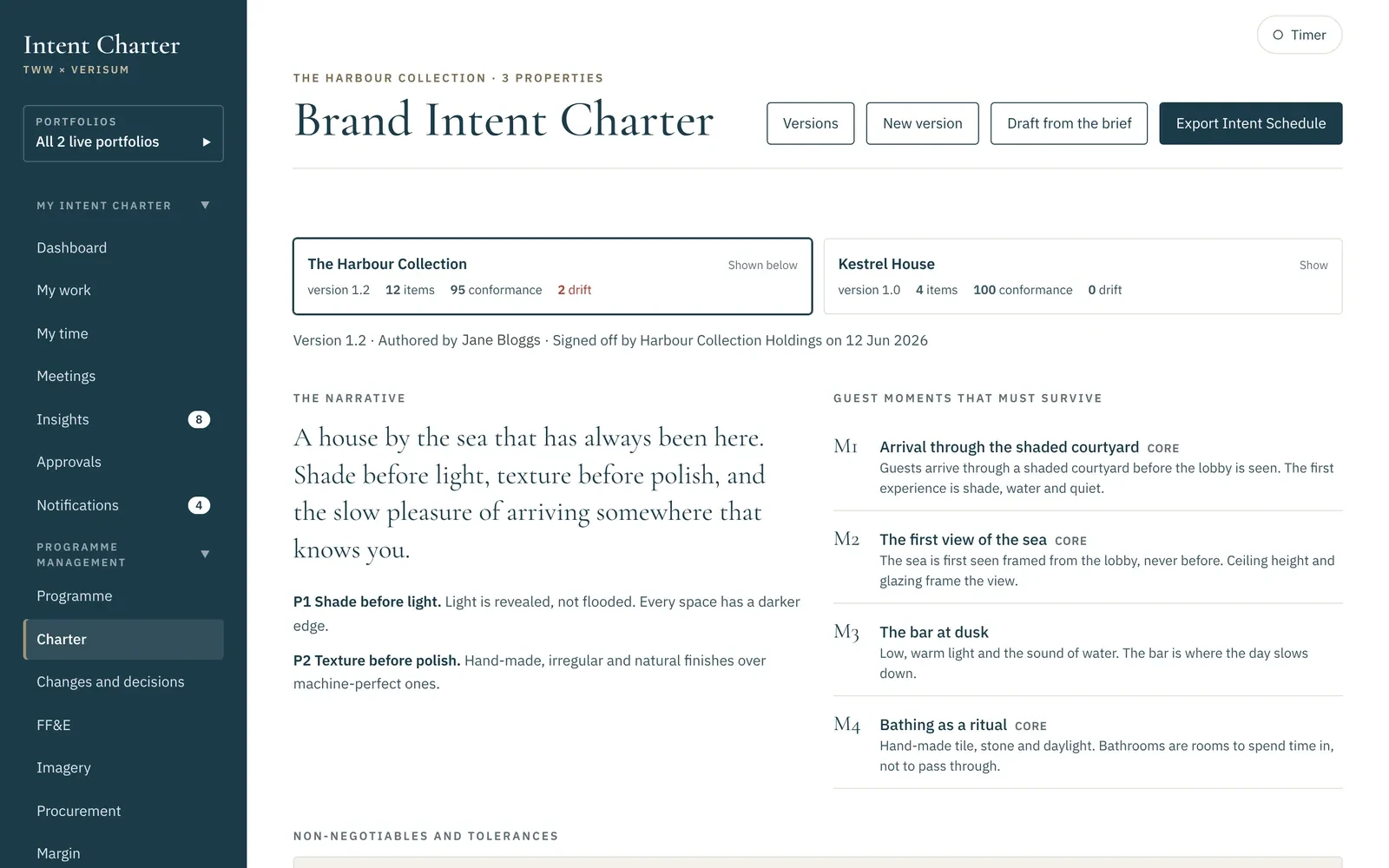
Guest moments and principles
What must survive delivery, in the studio's own words.
M2 · Moment · CoreThe first view of the sea, framed from the lobby.
Non-negotiables
What must not change, whoever proposes it, with a tolerance where there is one.
NN2 · Lighting2700K, plus or minus 100K, in all guest areas.
Tolerances
Where the design may flex, and by how much, so a sensible saving needs no debate.
T2 · Guest room furnitureOff-the-shelf for up to 30% of pieces.
Decision rights
Who decides which change, by its intent impact and cost. Anything bigger goes up.
Decision rightsLow impact: the programme lead. Medium: the studio. High: the client.
Charters are versioned and signed off. Each property can vary only where the Charter allows, and every decision is kept against the version it was made under. Examples are from the demo project.
Declare, check, decide, prove
Declare
The studio writes the Charter, or drafts it from the brief with AI and edits it. The client signs it off, and it becomes the reference for the whole project.
Check
Changes, RFIs, substitutions, submittals, FF&E items and drawing revisions that carry a bound are reviewed against the Charter as they arrive: what they touch, whether they are inside tolerance, and the options.
Decide
Decision rights send each change to whoever may decide it: the programme lead, the studio, or the client in their portal. Nothing is approved automatically.
Prove
Conformance is scored for each property and the whole portfolio, with a monthly intent report and a decisions log. At close-out the client receives a handover pack with the final account.
Built for both sides of the table
Run the whole job in one place, with the intent protected
The Charter, programme, FF&E schedule, presentations, procurement, site, time, fees and invoices, built around the design you are responsible for.
- Client approvals that come back if anything changes
- Contractors and suppliers on their own links, no accounts needed
- Costs and margins that only the studio ever sees
See whether you are getting what you paid for
Conformance, decisions, cost and programme across every property, with the decisions that are yours waiting in one portal.
- Changes the Charter says are yours come to you with options
- Contractor programmes in one view, with slippage between versions
- A handover pack and final account when the project closes
One project, every party, one record
The studio, the programme lead, the client, contractors and suppliers each see their part of the same project, and nothing that is not theirs.
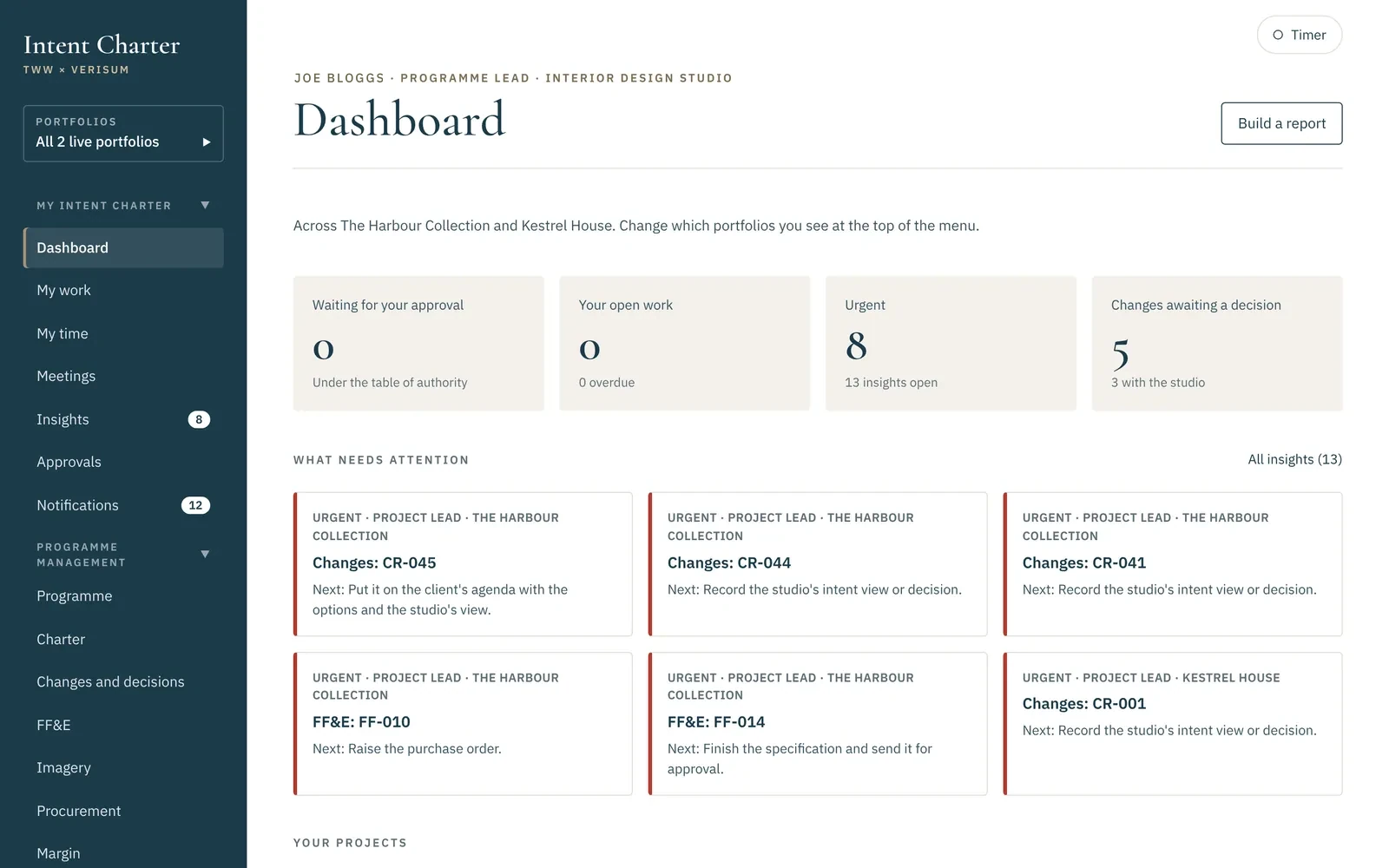
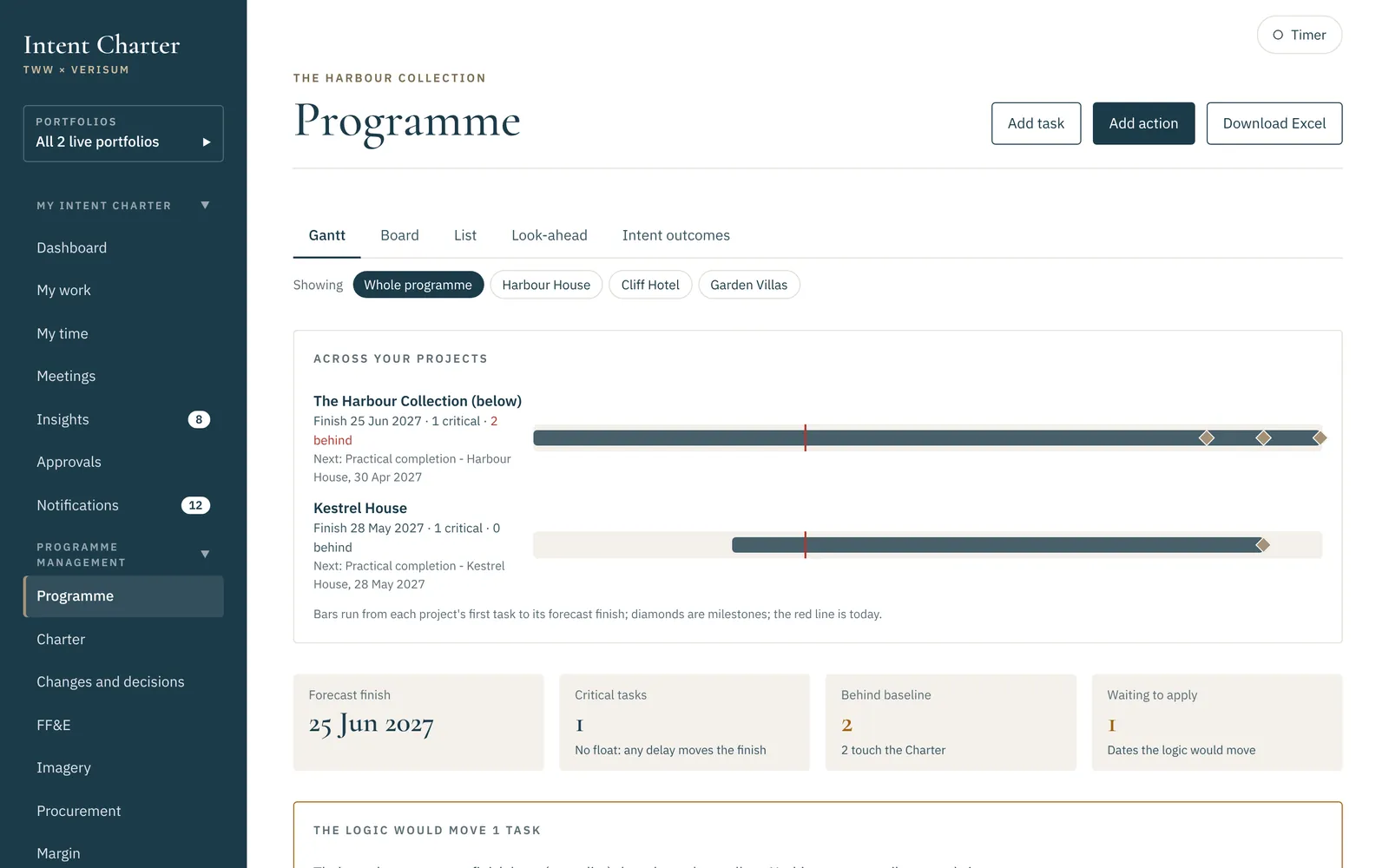
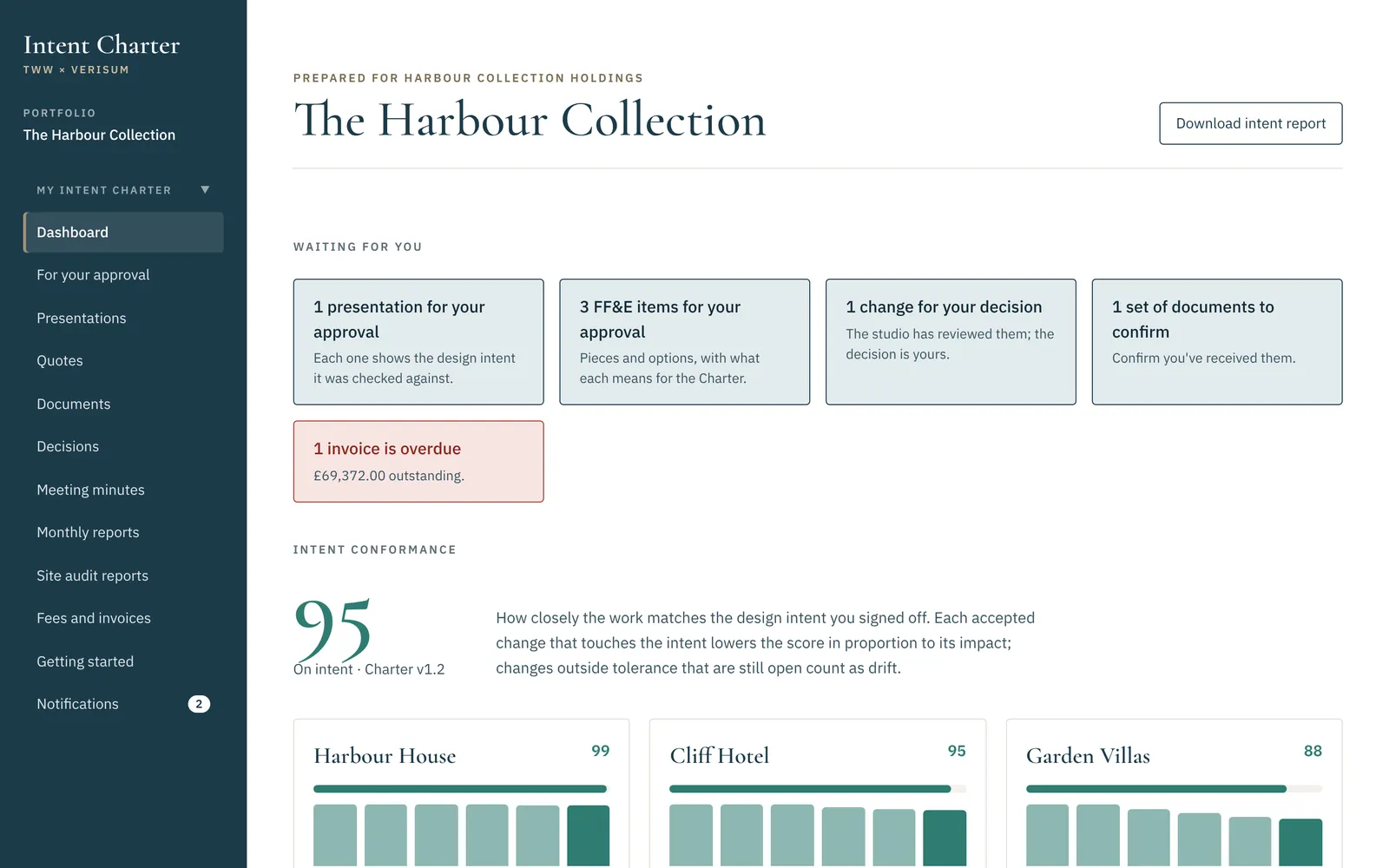
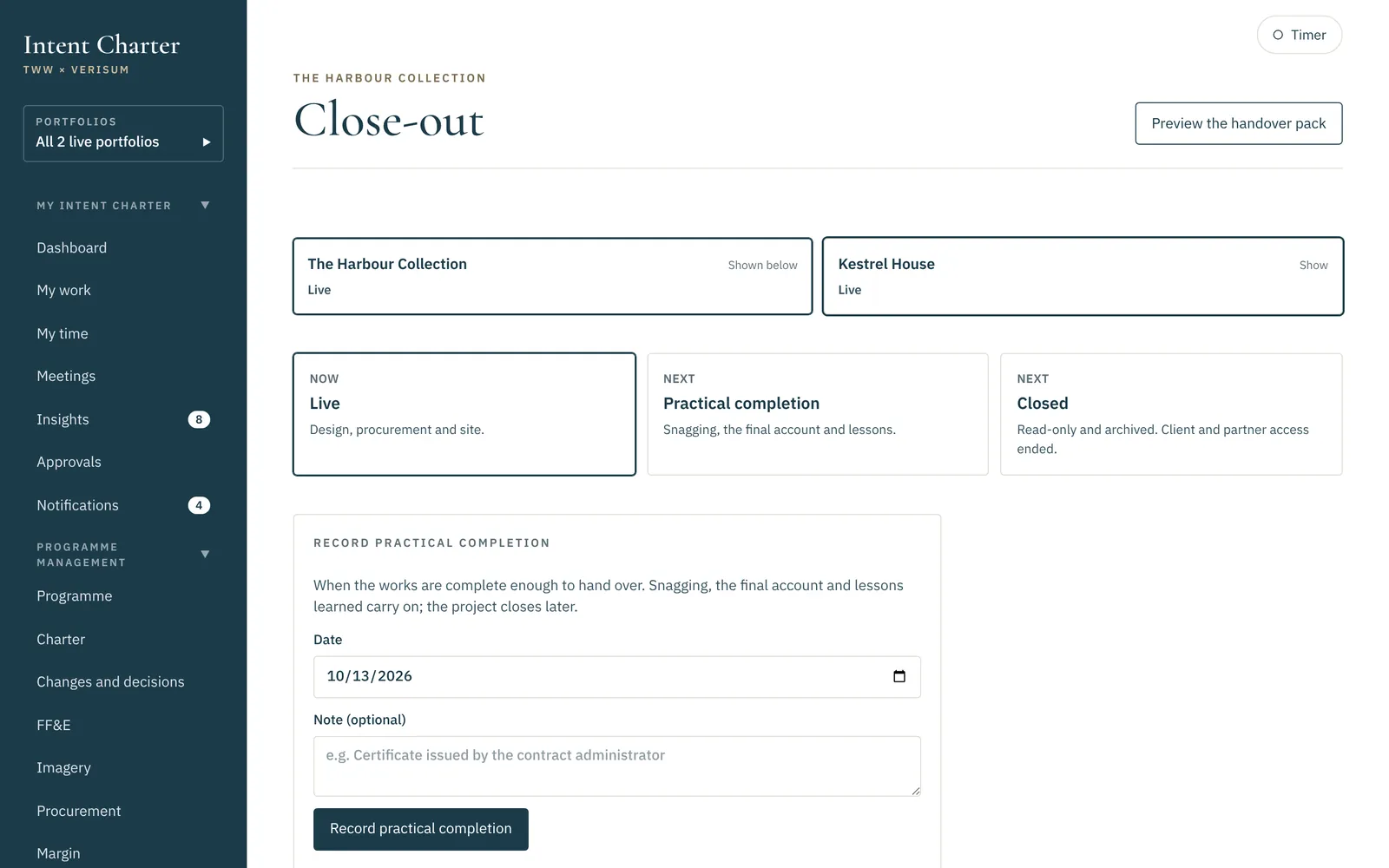
Claude recommends. People decide.
AI does the reading and the first draft. Every result records the model and prompt behind it, and nothing it proposes is applied until a person accepts it.
Choose Claude or ChatGPT for your studio. Your studio's AI work goes only to the engine you choose, and image tools you connect receive only the prompt you send them. Without an engine, built-in rules cover the main jobs more plainly. Your table of authority, set by the studio lead, decides who signs off what. Nothing is approved automatically.
- Reviews every change against the CharterWhat it touches, whether it is inside tolerance, the options with less impact, and who should decide.
- Drafts the Charter from your briefIt is told to use only your words, and lists the gaps as questions.
- Turns meetings into minutesSummary, decisions, actions and risks proposed from the transcript; each one confirmed by a person.
- Reads supplier quotes and site findingsPrices and lead times from a quote, findings from site photos and notes, ready for someone to check.
- Connects the facts across a projectA late order, a slipping task and an open change on the same item, raised as one insight with the next step.
Keeps the tools your project already uses
Intent Charter reads what tells it about the intent, and only ever writes back an intent view.
Built with a design studio, by Verisum
Verisum
Verisum builds governance software around one idea: declare intent, bind decisions to it, watch for drift and prove conformance. Intent Charter applies it to design and delivery.
These White Walls
The interior design studio These White Walls is the founding studio. The product is shaped by how their projects actually run, from the first brief to the handover.
Bring your next project
We are opening Intent Charter to a small number of studios and owners. Tell us about your practice or programme and we will be in touch.